

When AI Outsmarted My PhD: Lessons Learned towards 2026

December 31, 2025
by LIOR ZOREF
 @lior
@lior
It’s been quite a while since my last update here. Since October 7th, I’ve found myself writing less and doing more—focusing most of my energy on supporting at-risk youth through “Yesh Matzav” nonprofit I lead.
As 2025 comes to a close, I wanted to take a moment to pause, look back, and more importantly, look forward.
I sometime find myself imagining a conversation with my grandkids in the distant future. I hope to tell them about the most significant moments that shaped my life—a conversation about giving, dreams, disasters, revolutions, and crises.
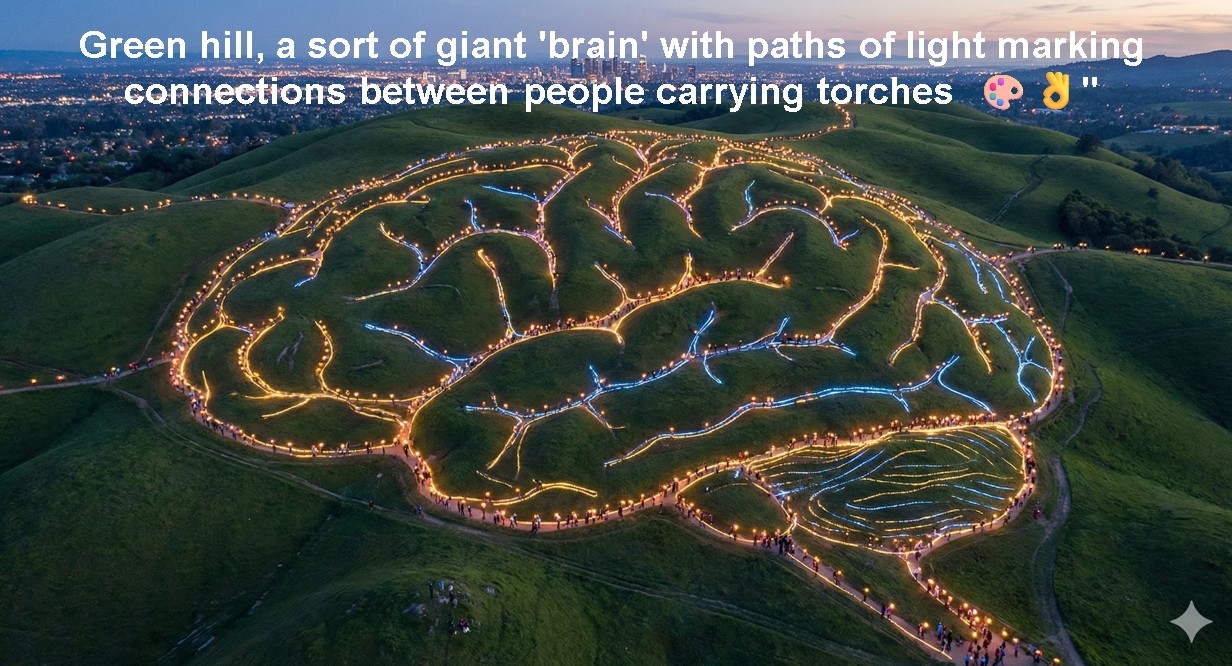
Just recently, I let ChatGPT analyze the PhD I spent seven years working on. I’ll admit, I was skeptical—what could it possibly understand that I haven’t chewed over for years? Well, it took GPT exactly 90 seconds to send me feedback that was more insightful and constructive than almost any critique I received from a human professor. Then, it went ahead and turned my research into an academic article in perfect English and even created an original painting inspired by it.
In a recent newsletter, I recommended the film Twinless. Without giving away any spoilers, it deals with the lives and deaths of identical twins. It got me thinking: will we all soon have an identical twin?
In a talk I recently gave to cardiologists in Barcelona, I spoke about the concept of the Digital Twin. In the future, each of us will have a digital counterpart. This “twin” will monitor our health and habits in real-time, helping us make better decisions. Think of it like Waze for your life—just like you get a “police ahead” alert, your digital twin will give you a real-time warning right before you’re about to make a mistake.
So, how different will the future really be?
Here is a small story about the moment I got my first real taste of what’s coming. But first, a question: Have you ever ridden in a driverless, autonomous car?
My first ride reminded me of the first time I ever surfed the web on a clunky computer in a Technion lab. It was one of those “aha!” moments where you suddenly grasp how a technology is going to change everything.
A few weeks ago, I was at the TED AI conference in San Francisco. The highlight wasn’t the (excellent) lectures; it was the ride in a Waymo—an autonomous taxi.
As the car moved, I thought about my aging parents and their struggle with mobility. I thought about myself at their age. At first, my right foot kept reflexively reaching for an imaginary brake pedal. But after a few minutes, I just let go. I surrendered to a completely new kind of experience.
I started dreaming of a future where the car seat turns into a bed. I’m driving toward the beach at sunset, stuck in traffic, but I’m napping. The car drops me off right on the boardwalk—no overpriced parking lots, no circling the block for 20 minutes. The car can go find its own parking while I watch the sunset.
As we head into 2026, I want to wish us all a year of health, good news, healing, and hope.